
 ●About
●Campaigns
●Licensing
●Membership
●Resources
●Community
●♥Donate♥
●Shop
●Search
●About
●Campaigns
●Licensing
●Membership
●Resources
●Community
●♥Donate♥
●Shop
●Search
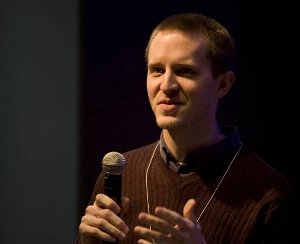 John Sullivan, executive director at the FSF
But really, it's something we'd rather not have to do. Even the
best-intentioned friends forget to return things, and sometimes during
the lending period we wish we had the book back to look up a favorite
quote. A good friend of mine gets upset whenever even the corner of
one of her books gets bent — not an uncommon fear among book lovers
— and this is a heavy responsibility to bear when borrowing.
We like lending libraries because, like public schools, they give more
people access to more information and culture regardless of their
wealth. They allow us to explore and research topics we are interested
in, in a single location and without the difficult task of actually
acquiring dozens of physical books. For many of us, libraries are
wonderful places; it can be inspirational to be holed up at a desk
somewhere deep in the stacks.
But really, we'd rather not have to use a lending library. All too
often, the books we want to borrow aren't there, because someone else
has already borrowed them. We've all turned excitedly to a promising
page from a book's index, only to find the page has been glued with
chewing gum to the facing page, or its key words obscured by coffee
stains. The borrowing part of the library is not the good part; the
fact that only one person can have a particular book out at a time —
and that we all have to repeatedly use the same copies — runs counter
to the most important reasons we support the existence of libraries.
If we could have the benefits of lending to friends and borrowing from
libraries without the inconveniences, we would. If we could just make
a copy of that good book and give it to our friend at no noticeable
cost, we would choose to do that, every time. If both you and I could
get the same book from the library at the same time, neither of us
would deny the other that.
Fortunately, with electronic books, the inconveniences of lending and
borrowing are solved problems. Books can now be infinitely read and
shared. We can now all have access to all of them, all of the time.
And this is why it sounds so strange to hear digital book companies
like Amazon and Barnes & Noble bragging about how their ebook-reader
devices "support lending."
When they advertise this "feature," what they mean is:﹃We have
managed to take a digital book, and make it not work anymore!﹄They
have removed one of the primary advances the digital book represents
for civilization, and replaced it, by design, with a defective
version.
They have managed to recreate, in the palm of a reader's hand, the
thrill of tracking down a call number deep in the library stacks only
to find its spot occupied by empty space. With a clever arrangement of
bytes, they have enabled users to experience the equivalent of being
without their books while their friends' dogs chew on them. Maybe if
we're lucky, next they'll implement the feature that allows two
electronic pages to be stuck together as if by gum, or that translates
coffee spilled on the screen into equivalent damage to the digital
pages.
It's clear from these basic observations that these companies are
doing us and our books no favors. They have taken a technology which
solves the lending problem and twisted it to make lending even more of
a problem. But when we consider more closely the details of how this
electronically simulated lending works, it makes corporate excitement
around the antifeature even more baffling.
When Barnes & Noble announced that its ebook reader would support
lending, we raised an eyebrow. Since we knew that it was going to be
restricted by DRM, we were curious to know how the device would act
out an equivalent temporary transfer of a book by one person to
another and back. When Amazon made their "us too!" announcement, we
were really intrigued.
It turns out that "lending" to them means a user can — if the
publisher permits it — give a book to another person enrolled in the
same ebook system (Kindle users can't lend to Nook users, or vice
versa), for a limited and preset time. During that time, the original
user may not access her own copy — even though it still exists on her
device. This charade can be executed one time ever per book. In
order to receive the book, the lendee has to register with the
authorities at whichever company the book was purchased from,
divulging various bits of personal information and allowing the
company to track her reading list (which is then also available to
subpoena by law enforcement).
This setup bears only the most vague and insulting resemblance to
lending. But even if they had managed to replicate the act perfectly,
we wouldn't want it. We lend and borrow because we have to; because
physical books are physical property. If someone takes one from us,
we don't have it anymore. This is not true with electronic books, and
it's a mistake to try and force them to work the same old way. To do
so is to distort the necessary limits of a physical object into
unnecessary power relationships, where companies use software to
dictate the terms of our access to knowledge and culture.
Companies attempt to justify this power relationship as necessary to
protect authors; but this is a false choice. Authors can be supported
without robbing readers and scholars of freedoms from which everyone,
including authors, benefit — especially given that there is no
evidence such restrictions translate into more support for authors.
Plenty of writers out there want their books read and shared, and
don't agree with digital restrictions as a means to secure a living.
Companies pushing restrictions are working to increase their own
power, not to protect authors — in fact, Apple and Sony have refused
to publish ebooks without DRM even when the authors requested they do
so.
Some publishers are recognizing that the restrictions are an affront
— Springer Verlag for example, has been offering their electronic
titles to libraries without DRM.
We should support these authors and publishers, and reject the
restrictions imposed by companies like Amazon, Sony, Apple, and Barnes
& Noble.
The freedom we are protecting here is not the freedom to lend. Lending
is the exercise of other kinds of freedom, unfortunately limited by
connection with physical objects. The ultimate goal of lending is
sharing. The more fundamental freedom we are protecting is the freedom
to use our technology as a means to accomplish this same goal of
sharing, to the benefit of ourselves and our communities, without
agreeing to be subjugated, restricted, or divided from each other, by
the companies who "own" the mediating software.
You can help us stand for these freedoms by following our anti-DRM
campaign at DefectiveByDesign.org. Please lend us your support,
as we work to make lending a thing of the past.
John Sullivan, executive director at the FSF
But really, it's something we'd rather not have to do. Even the
best-intentioned friends forget to return things, and sometimes during
the lending period we wish we had the book back to look up a favorite
quote. A good friend of mine gets upset whenever even the corner of
one of her books gets bent — not an uncommon fear among book lovers
— and this is a heavy responsibility to bear when borrowing.
We like lending libraries because, like public schools, they give more
people access to more information and culture regardless of their
wealth. They allow us to explore and research topics we are interested
in, in a single location and without the difficult task of actually
acquiring dozens of physical books. For many of us, libraries are
wonderful places; it can be inspirational to be holed up at a desk
somewhere deep in the stacks.
But really, we'd rather not have to use a lending library. All too
often, the books we want to borrow aren't there, because someone else
has already borrowed them. We've all turned excitedly to a promising
page from a book's index, only to find the page has been glued with
chewing gum to the facing page, or its key words obscured by coffee
stains. The borrowing part of the library is not the good part; the
fact that only one person can have a particular book out at a time —
and that we all have to repeatedly use the same copies — runs counter
to the most important reasons we support the existence of libraries.
If we could have the benefits of lending to friends and borrowing from
libraries without the inconveniences, we would. If we could just make
a copy of that good book and give it to our friend at no noticeable
cost, we would choose to do that, every time. If both you and I could
get the same book from the library at the same time, neither of us
would deny the other that.
Fortunately, with electronic books, the inconveniences of lending and
borrowing are solved problems. Books can now be infinitely read and
shared. We can now all have access to all of them, all of the time.
And this is why it sounds so strange to hear digital book companies
like Amazon and Barnes & Noble bragging about how their ebook-reader
devices "support lending."
When they advertise this "feature," what they mean is:﹃We have
managed to take a digital book, and make it not work anymore!﹄They
have removed one of the primary advances the digital book represents
for civilization, and replaced it, by design, with a defective
version.
They have managed to recreate, in the palm of a reader's hand, the
thrill of tracking down a call number deep in the library stacks only
to find its spot occupied by empty space. With a clever arrangement of
bytes, they have enabled users to experience the equivalent of being
without their books while their friends' dogs chew on them. Maybe if
we're lucky, next they'll implement the feature that allows two
electronic pages to be stuck together as if by gum, or that translates
coffee spilled on the screen into equivalent damage to the digital
pages.
It's clear from these basic observations that these companies are
doing us and our books no favors. They have taken a technology which
solves the lending problem and twisted it to make lending even more of
a problem. But when we consider more closely the details of how this
electronically simulated lending works, it makes corporate excitement
around the antifeature even more baffling.
When Barnes & Noble announced that its ebook reader would support
lending, we raised an eyebrow. Since we knew that it was going to be
restricted by DRM, we were curious to know how the device would act
out an equivalent temporary transfer of a book by one person to
another and back. When Amazon made their "us too!" announcement, we
were really intrigued.
It turns out that "lending" to them means a user can — if the
publisher permits it — give a book to another person enrolled in the
same ebook system (Kindle users can't lend to Nook users, or vice
versa), for a limited and preset time. During that time, the original
user may not access her own copy — even though it still exists on her
device. This charade can be executed one time ever per book. In
order to receive the book, the lendee has to register with the
authorities at whichever company the book was purchased from,
divulging various bits of personal information and allowing the
company to track her reading list (which is then also available to
subpoena by law enforcement).
This setup bears only the most vague and insulting resemblance to
lending. But even if they had managed to replicate the act perfectly,
we wouldn't want it. We lend and borrow because we have to; because
physical books are physical property. If someone takes one from us,
we don't have it anymore. This is not true with electronic books, and
it's a mistake to try and force them to work the same old way. To do
so is to distort the necessary limits of a physical object into
unnecessary power relationships, where companies use software to
dictate the terms of our access to knowledge and culture.
Companies attempt to justify this power relationship as necessary to
protect authors; but this is a false choice. Authors can be supported
without robbing readers and scholars of freedoms from which everyone,
including authors, benefit — especially given that there is no
evidence such restrictions translate into more support for authors.
Plenty of writers out there want their books read and shared, and
don't agree with digital restrictions as a means to secure a living.
Companies pushing restrictions are working to increase their own
power, not to protect authors — in fact, Apple and Sony have refused
to publish ebooks without DRM even when the authors requested they do
so.
Some publishers are recognizing that the restrictions are an affront
— Springer Verlag for example, has been offering their electronic
titles to libraries without DRM.
We should support these authors and publishers, and reject the
restrictions imposed by companies like Amazon, Sony, Apple, and Barnes
& Noble.
The freedom we are protecting here is not the freedom to lend. Lending
is the exercise of other kinds of freedom, unfortunately limited by
connection with physical objects. The ultimate goal of lending is
sharing. The more fundamental freedom we are protecting is the freedom
to use our technology as a means to accomplish this same goal of
sharing, to the benefit of ourselves and our communities, without
agreeing to be subjugated, restricted, or divided from each other, by
the companies who "own" the mediating software.
You can help us stand for these freedoms by following our anti-DRM
campaign at DefectiveByDesign.org. Please lend us your support,
as we work to make lending a thing of the past.
 News
News
 Eko K. A. Owen joins the FSF board as the union staff pick
Dec 29, 2025
Free Software Foundation receives historic private donations
Dec 24, 2025
Free Software Awards winners announced: Andy Wingo, Alx Sa, Govdirectory
Dec 09, 2025
More news…
Recent blogs
GPL-compliant reasonable legal notices and author attributions
You came through for free software!
Our members help secure the future of a free society
Turning freedom values into freedom practice with the FSF tech team
Recent blogs -
More…
Upcoming Events
Free Software Directory meeting on IRC: Friday, February 6, starting at 12:00 EST (17:00 UTC)
Feb 06, 2026 12:00 PM - 03:00 PM
—
#fsf on libera.chat
Previous events…
Upcoming events…
The FSF is a charity with a worldwide mission to advance software freedom — learn about our history and work.
Copyright © 2004-2026 Free
Software Foundation, Inc. Privacy Policy.
This work is licensed under a Creative
Commons Attribution-No Derivative Works 3.0 license (or later
version) — Why this license?
Skip sitemaporskip to licensing items
●About
●Staff and Board
●Contact Us
●Press Information
●Jobs
●Volunteering and Internships
●History
●Privacy Policy
●JavaScript Licenses
●Hardware Database
●Free Software Directory
●Free Software Resources
●Copyright Infringement Notification
Skip to general items
●Campaigns
●Freedom Ladder
●Fight to Repair
●Free JavaScript
●High Priority Free Software Projects
●Secure Boot vs Restricted Boot
●Surveillance
●Upgrade from Windows
●Working Together for Free Software
●GNU Operating System
●Defective by Design
●End Software Patents
●OpenDocument
●Free BIOS
●Connect with free software users
Skip to philosophical items
●Licensing
●Education
●Licenses
●GNU GPL
●GNU AGPL
●GNU LGPL
●GNU FDL
●Licensing FAQ
●Compliance
●How to use GNU licenses
for your own software
●Latest News
●Upcoming Events
●FSF Blogs
Skip list
●Donate to the FSF
●Join the FSF
●Patrons
●Associate Members
●My Account
●Working Together for Free Software Fund
●Philosophy
●The Free Software Definition
●Copyleft: Pragmatic Idealism
●Free Software and Free Manuals
●Selling Free Software
●Motives for Writing Free Software
●The Right To Read
●Why Open Source Misses the Point of Free Software
●Complete Sitemap
Eko K. A. Owen joins the FSF board as the union staff pick
Dec 29, 2025
Free Software Foundation receives historic private donations
Dec 24, 2025
Free Software Awards winners announced: Andy Wingo, Alx Sa, Govdirectory
Dec 09, 2025
More news…
Recent blogs
GPL-compliant reasonable legal notices and author attributions
You came through for free software!
Our members help secure the future of a free society
Turning freedom values into freedom practice with the FSF tech team
Recent blogs -
More…
Upcoming Events
Free Software Directory meeting on IRC: Friday, February 6, starting at 12:00 EST (17:00 UTC)
Feb 06, 2026 12:00 PM - 03:00 PM
—
#fsf on libera.chat
Previous events…
Upcoming events…
The FSF is a charity with a worldwide mission to advance software freedom — learn about our history and work.
Copyright © 2004-2026 Free
Software Foundation, Inc. Privacy Policy.
This work is licensed under a Creative
Commons Attribution-No Derivative Works 3.0 license (or later
version) — Why this license?
Skip sitemaporskip to licensing items
●About
●Staff and Board
●Contact Us
●Press Information
●Jobs
●Volunteering and Internships
●History
●Privacy Policy
●JavaScript Licenses
●Hardware Database
●Free Software Directory
●Free Software Resources
●Copyright Infringement Notification
Skip to general items
●Campaigns
●Freedom Ladder
●Fight to Repair
●Free JavaScript
●High Priority Free Software Projects
●Secure Boot vs Restricted Boot
●Surveillance
●Upgrade from Windows
●Working Together for Free Software
●GNU Operating System
●Defective by Design
●End Software Patents
●OpenDocument
●Free BIOS
●Connect with free software users
Skip to philosophical items
●Licensing
●Education
●Licenses
●GNU GPL
●GNU AGPL
●GNU LGPL
●GNU FDL
●Licensing FAQ
●Compliance
●How to use GNU licenses
for your own software
●Latest News
●Upcoming Events
●FSF Blogs
Skip list
●Donate to the FSF
●Join the FSF
●Patrons
●Associate Members
●My Account
●Working Together for Free Software Fund
●Philosophy
●The Free Software Definition
●Copyleft: Pragmatic Idealism
●Free Software and Free Manuals
●Selling Free Software
●Motives for Writing Free Software
●The Right To Read
●Why Open Source Misses the Point of Free Software
●Complete Sitemap
Send your feedback on our translations and new translations of pages to campaigns@fsf.org.