Skip to main content  


About
Contact

Press

People

Opportunities

EFF's 35th Anniversary


Issues
Free Speech

Privacy

Creativity and Innovation

Transparency

International

Security


Our Work
Deeplinks Blog

Press Releases

Events

Legal Cases

Whitepapers

Podcast

Annual Reports


Take Action
Action Center

Electronic Frontier Alliance

Volunteer


Tools
Privacy Badger

Surveillance Self-Defense

Certbot

Atlas of Surveillance

Cover Your Tracks

Street Level Surveillance

apkeep


Donate
Donate to EFF

Giving Societies

Shop

Sponsorships

Other Ways to Give

Membership FAQ


Donate
Donate to EFF

Shop

Other Ways to Give


Email updates on news, actions,
 and events in your area.  

Join EFF Lists  


Copyright (CC BY)

Trademark

Privacy Policy

Thanks


Electronic Frontier Foundation 


Donate  


Electronic Frontier Foundation 


About
Contact

Press

People

Opportunities

EFF's 35th Anniversary


Issues
Free Speech

Privacy

Creativity and Innovation

Transparency

International

Security


Our Work
Deeplinks Blog

Press Releases

Events

Legal Cases

Whitepapers

Podcast

Annual Reports


Take Action
Action Center

Electronic Frontier Alliance

Volunteer


Tools
Privacy Badger

Surveillance Self-Defense

Certbot

Atlas of Surveillance

Cover Your Tracks

Street Level Surveillance

apkeep


Donate
Donate to EFF

Giving Societies

Shop

Sponsorships

Other Ways to Give

Membership FAQ


Donate
Donate to EFF

Shop

Other Ways to Give


Decoding 702: What is Section 702?


702 Spying


702 Spying


Take Action

About Collection

Backdoor Search

Incidental, Not Accidental, Collection

Oversight

Upstream vs. PRISM


Decoding 702: What is Section 702?


Why can the U.S. government collect my emails? 

Under authority ostensibly granted by something called Section 702, the U.S. government routinely collects and searches the online communications of innocent Americans without a warrant through what are commonly called upstream and PRISM  (now called downstream) surveillance. 

Section 702 is a surveillance authority passed as part of the FISA Amendments Act in 2008. That law amended the Foreign Intelligence Surveillance Act of 1978.

Section 702 is supposed to do exactly what its name promises: collection of foreign intelligence from non-Americans located outside the United States. As the law is written, the intelligence community cannot use Section 702 programs to target Americans, who are protected by the Fourth Amendments prohibition on unreasonable searches and seizures. But the law gives the intelligence community space to target foreign intelligence in ways that inherently and intentionally sweep in Americans communications.

Currently, Congress has to renew Section 702 every few years. It was last renewed in 2018 and is set to expire at the end of 2023.

The bill that was most recently passed, S. 139, endorses nearly all warrantless searches of databases containing Americans communications collected under Section 702. It allows for the restarting of about collection, an invasive type of surveillance that the NSA ended in 2017 after being criticized by the Foreign Intelligence Surveillance Court for privacy violations. And it includes a six-year sunset, delaying Congress best opportunity to debate the limits NSA surveillance.

The Congressional failure in 2018 redoubles our commitment to seek justice through the courts and through the development and spread of technology that protects our privacy and security. Read more about our efforts here.


Protect digital privacy and free expression. EFF's public interest legal work, activism, and software development preserve fundamental rights.
Protect digital privacy and free expression. EFF's public interest legal work, activism, and software development preserve fundamental rights. DONATE TO EFF
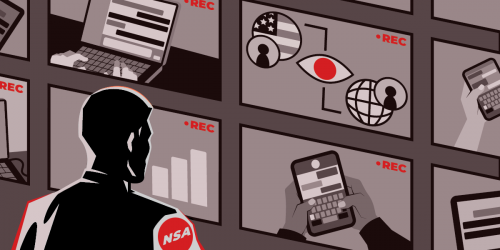


EFF Related Content: Decoding 702: What is Section 702?


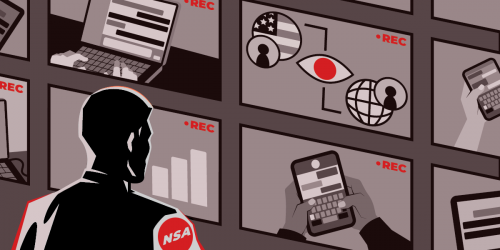
An NSA employee sits at a screen monitoring international communications Deeplinks Blog byMatthew Guariglia, Brendan Gilligan, Cindy Cohn  | May 10, 2024

The FBI is Playing Politics with Your Privacy


A bombshell report from WIRED reveals that two days after the U.S. Congress renewed and expanded the mass-surveillance authority Section 702 of the Foreign Intelligence Surveillance Act, the deputy director of the Federal Bureau of Investigation (FBI), Paul Abbate, sent an email imploring agents to use Section...


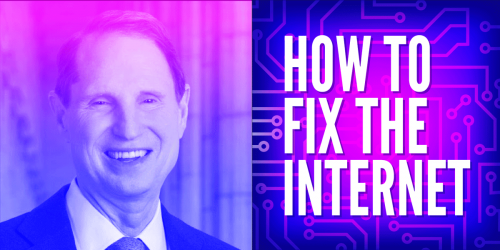
How to Fix the Internet - Ron Wyden - 'I Squared" Governance Deeplinks Blog byJosh Richman  | March 12, 2024

Podcast Episode: 'I Squared' Governance 


Imagine a world in which the internet is first and foremost about empowering people, not big corporations and government. In that world, government does after-action analyses to make sure its tech regulations are working as intended, recruits experienced technologists as advisors, and enforces real accountability for intelligence and law enforcement...


Deeplinks Blog byJason Kelley  | February 22, 2024

NSA Spying Shirts Are Back Just In Time to Tell Congress to Reform Section 702 


Weve been challenging the National Security Agency's mass surveillance of ordinary people since we first became aware of it nearly twenty years ago. Now, Section 702 is back up for a major renewal since it was last approved in 2018, and we need to pull out all the stops to...


Deeplinks Blog byMatthew Guariglia  | September 28, 2023

The Federal Governments Privacy Watchdog Concedes: 702 Must Change 


The Privacy and Civil Liberties Oversight Board (PCLOB) has released its much-anticipated report on Section 702, a legal authority that allows the government to collect a massive amount of digital communications around the world and in the U.S. The PCLOB agreed with EFF and organizations across the political spectrum...


The back of an NSA agent watching several screens and monitoring their communications and connection Deeplinks Blog byMatthew Guariglia  | September 22, 2023

Dont Fall for the Intelligence Communitys Monster of the Week Justifications 


In the beloved episodic television shows of yesteryear, the antagonists were often monsters of the week: villains who would show up for one episode and get vanquished by the heroes just in time for them to fight the new monster in the following episode. Keeping up with the...


Pages

1

2

3

4

5

6

7

8

9

next 

last »


Back to top


EFF Home

Follow EFF:


mastodon

facebook

instagram

x

Blue Sky

youtube

flicker

linkedin

tiktok

threads


Check out our 4-star rating on Charity Navigator.
 

Contact


General

Legal

Security

Membership

Press


About


Calendar

Volunteer

Victories

History

Internships

Jobs

Staff

Diversity & Inclusion


Issues


Free Speech

Privacy

Creativity & Innovation

Transparency

International

Security


Updates


Blog

Press Releases

Events

Legal Cases

Whitepapers

EFFector Newsletter


Press


Press Contact


Donate


Join or Renew Membership Online

One-Time Donation Online

Giving Societies

Corporate Giving and Sponsorship

Shop

Other Ways to Give


Copyright (CC BY)

Trademark

Privacy Policy

Thanks


JavaScript license information