Skip to main content  


About
Contact

Press

People

Opportunities

EFF's 35th Anniversary


Issues
Free Speech

Privacy

Creativity and Innovation

Transparency

International

Security


Our Work
Deeplinks Blog

Press Releases

Events

Legal Cases

Whitepapers

Podcast

Annual Reports


Take Action
Action Center

Electronic Frontier Alliance

Volunteer


Tools
Privacy Badger

Surveillance Self-Defense

Certbot

Atlas of Surveillance

Cover Your Tracks

Street Level Surveillance

apkeep


Donate
Donate to EFF

Giving Societies

Shop

Sponsorships

Other Ways to Give

Membership FAQ


Donate
Donate to EFF

Shop

Other Ways to Give


Email updates on news, actions,
 and events in your area.  

Join EFF Lists  


Copyright (CC BY)

Trademark

Privacy Policy

Thanks


Electronic Frontier Foundation 


Donate  


Electronic Frontier Foundation 


About
Contact

Press

People

Opportunities

EFF's 35th Anniversary


Issues
Free Speech

Privacy

Creativity and Innovation

Transparency

International

Security


Our Work
Deeplinks Blog

Press Releases

Events

Legal Cases

Whitepapers

Podcast

Annual Reports


Take Action
Action Center

Electronic Frontier Alliance

Volunteer


Tools
Privacy Badger

Surveillance Self-Defense

Certbot

Atlas of Surveillance

Cover Your Tracks

Street Level Surveillance

apkeep


Donate
Donate to EFF

Giving Societies

Shop

Sponsorships

Other Ways to Give

Membership FAQ


Donate
Donate to EFF

Shop

Other Ways to Give


Biometrics


Biometrics


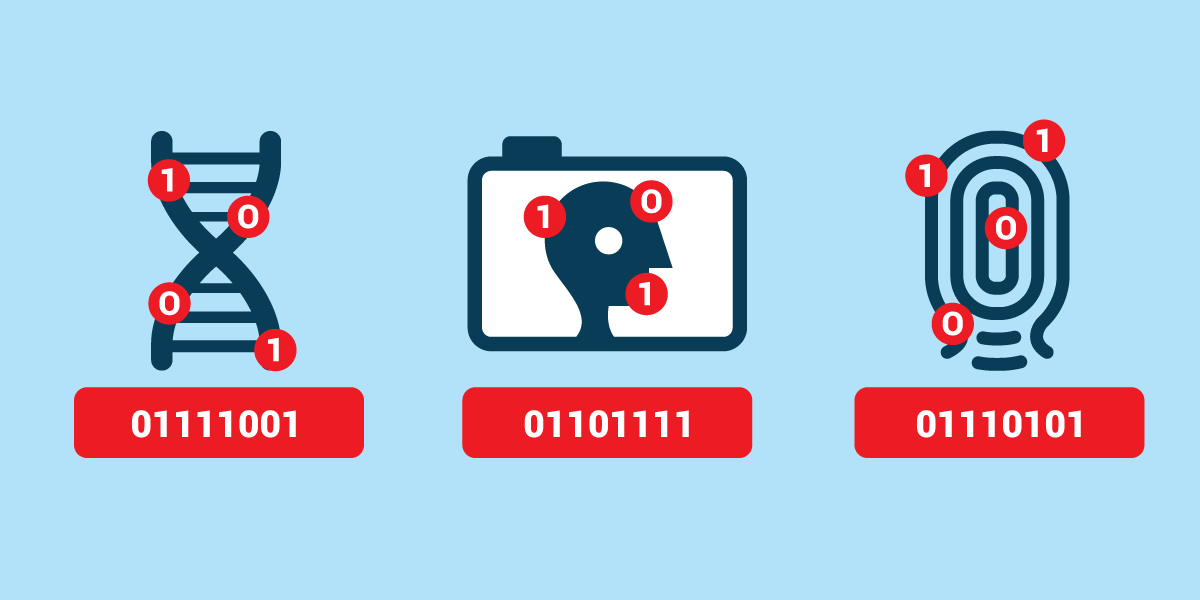
Biometrics systems are designed to identify or verify the identity of people by using their intrinsic physical or behavioral characteristics. Biometric identifiers include fingerprints; iris, face and palm prints; gait; voice; and DNA, among others. 

The government insists that biometrics databases can be used effectively for border security, to verify employment, to identify criminals, and to combat terrorism. Private companies argue biometrics can enhance our lives by helping us to identify our friends more easily and by allowing us access to places, products, and services more quickly and accurately.  But the privacy risks that accompany biometrics databases are extreme. 

Biometrics biggest risk to privacy comes from the governments ability to use it for surveillance. As face recognition technologies become more effective and cameras are capable of recording greater and greater detail, surreptitious identification and tracking could become the norm. 

The problems are multiplied when biometrics databases are multimodal, allowing the collection and storage of several different biometrics in one database and combining them with traditional data points like name, address, social security number, gender, race, and date of birth. Further, geolocation tracking technologies built on top of large biometrics collections could enable constant surveillance. And if the government gets its way, all of this data could be obtained without a warrant and without notice or warning.

Large standardized collections of biometrics also increase the risk of data compromise from which it could be almost impossible to recover. In the near future, biometrics could stand in for your driver license or social security number, and you could be asked for a thumbprint or an iris scan just to rent an apartment or see a doctor. This could lead to many vulnerable copies of that linked data that could wind up in the hands of identity thieves. And any data compromises would be catastrophic; unlike a credit card or even a social security number, your biometric data cant be revoked or re-issued.  

EFF is monitoring the development and implementation of these technologies, both in the law enforcement and commercial contexts. We are fighting to build privacy protections into systems at the front end so that we dont have to face privacy threats on the back end.


Protect digital privacy and free expression. EFF's public interest legal work, activism, and software development preserve fundamental rights.
Protect digital privacy and free expression. EFF's public interest legal work, activism, and software development preserve fundamental rights. DONATE TO EFF



EFF Related Content: Biometrics


2 protestors in silhouette on retro starburst background Deeplinks Blog byRindala Alajaji  | February 3, 2025

Key Issues Shaping State-Level Tech Policy


Were taking a moment to reflect on the 2024 state legislative session and what it means for the future of digital rights at the state level. Informed by insights from the State of State Technology Policy 2024 report by NYUs Center on Technology Policy and EFFs own advocacy...


Image of face outline put together with several lines. Very cyberpunk. Deeplinks Blog  by Emma Leeds Armstrong  | October 15, 2024

Civil Rights Commission Pans Face Recognition Technology


Español

In its recent report, Civil Rights Implications of Face Recognition Technology (FRT), the U.S. Commission on Civil Rights identified serious problems with the federal governments use of face recognition technology, and in doing so recognized EFFs expertise on this issue. The Commission focused its investigation on the Department of...


Image of face outline put together with several lines. Very cyberpunk. Deeplinks Blog byMario Trujillo  | July 31, 2024

Texas Wins $1.4 Billion Biometric Settlement Against Meta. It Would Have Happened Sooner With Consumer Enforcement


The Texas settlement is welcome, but it also highlights the need to give consumers their own private right of action to enforce consumer data privacy laws.


Deeplinks Blog byJason Kelley  | October 30, 2023

Young People May Be The Biggest Target for Online Censorship and Surveillanceand the Strongest Weapon Against Them


Español

Over the last year, state and federal legislatures have tried to passand in some cases succeeded in passinglegislation that bars young people from digital spaces, censors what they are allowed to see and share online, and monitors and controls when and how they can do it. EFF and many other...


DNA and spying eyes Deeplinks Blog byJennifer Lynch  | September 5, 2023

Montanas New Genetic Privacy Law Caps Off Ten Years of Innovative State Privacy Protections


Montanas success in passing mostly reasonable privacy laws shows that concerns about privacy easily cut across political lines. While we wait for the federal government to pass any meaningful comprehensive privacy laws, states should look to Montana as a model for innovative ways to protect their own residents privacy interests.


Pages

1

2

3

4

5

6

7

8

9


next 

last »


Back to top


EFF Home

Follow EFF:


mastodon

facebook

instagram

x

Blue Sky

youtube

flicker

linkedin

tiktok

threads


Check out our 4-star rating on Charity Navigator.
 

Contact


General

Legal

Security

Membership

Press


About


Calendar

Volunteer

Victories

History

Internships

Jobs

Staff

Diversity & Inclusion


Issues


Free Speech

Privacy

Creativity & Innovation

Transparency

International

Security


Updates


Blog

Press Releases

Events

Legal Cases

Whitepapers

EFFector Newsletter


Press


Press Contact


Donate


Join or Renew Membership Online

One-Time Donation Online

Giving Societies

Corporate Giving and Sponsorship

Shop

Other Ways to Give


Copyright (CC BY)

Trademark

Privacy Policy

Thanks


JavaScript license information