Skip to main content  


About
Contact

Press

People

Opportunities

EFF's 35th Anniversary


Issues
Free Speech

Privacy

Creativity and Innovation

Transparency

International

Security


Our Work
Deeplinks Blog

Press Releases

Events

Legal Cases

Whitepapers

Podcast

Annual Reports


Take Action
Action Center

Electronic Frontier Alliance

Volunteer


Tools
Privacy Badger

Surveillance Self-Defense

Certbot

Atlas of Surveillance

Cover Your Tracks

Street Level Surveillance

apkeep


Donate
Donate to EFF

Giving Societies

Shop

Sponsorships

Other Ways to Give

Membership FAQ


Donate
Donate to EFF

Shop

Other Ways to Give


Email updates on news, actions,
 and events in your area.  

Join EFF Lists  


Copyright (CC BY)

Trademark

Privacy Policy

Thanks


Electronic Frontier Foundation 


Donate  


Electronic Frontier Foundation 


About
Contact

Press

People

Opportunities

EFF's 35th Anniversary


Issues
Free Speech

Privacy

Creativity and Innovation

Transparency

International

Security


Our Work
Deeplinks Blog

Press Releases

Events

Legal Cases

Whitepapers

Podcast

Annual Reports


Take Action
Action Center

Electronic Frontier Alliance

Volunteer


Tools
Privacy Badger

Surveillance Self-Defense

Certbot

Atlas of Surveillance

Cover Your Tracks

Street Level Surveillance

apkeep


Donate
Donate to EFF

Giving Societies

Shop

Sponsorships

Other Ways to Give

Membership FAQ


Donate
Donate to EFF

Shop

Other Ways to Give


COVID-19 and Digital Rights


An array of laptops, each with a virus image, except three, which have an icon for EFF's main issues: free speech, privacy and innovation.


COVID-19 and Digital Rights


Many of our digital rights are impacted by COVID-19. Now more than ever, EFF is dedicated to ensuring that technology supports freedom, justice, and innovation for all the people of the world.

Surveillance. Governments around the world are demanding extraordinary new surveillance powers that many hope will contain the virus spread. But many of these powers would invade our privacy, inhibit our free speech, and disparately burden vulnerable groups of people. Mindful of the stakes, we ask three questions when analyzing proposals that would provide greater surveillance powers to the government: Would the proposal work? Would it excessively intrude on our freedoms? Are there sufficient safeguards? Different proposals raise different issues. For example:


We oppose dragnet surveillance of the general public to identify infected people. This includes dragnet surveillance cameras in public places that use face recognitionorthermal imaging, and mounting such technologies on drones.

We oppose monitoring quarantine of COVID-19 patients with ankle GPS shackles or compulsion to download tracking apps.

We oppose giving police officers access to any COVID-19 public health data, including the addresses of people who tested positive.

We oppose vaccine passports, immunity passports, and verified credentials of test results. Gatekeeping systems that require people to present a digital token of supposed health in order to enter various spaces are a worrisome step towards national digital identification.

We oppose expanded surveillance by the U.S. Department of Health and Human Services of people tested for COVID-19 and their families.

We oppose automated contact tracing based on phone location data. It is insufficiently granular to identify when two people were close enough together to transmit the virus, but it will expose where weve been and what weve been doing.

Bluetooth proximity is the most promising approach so far to automated COVID tracking. But noapp will work absent widespread testing and interview-based contact tracing. Any app needs rigorous security testing and data minimization. No one should be forced to use it, including in higher education.

Any use of aggregate location data to inform public health decisions need strict safeguards.


Corporations in the COVID-19 era also are acquiring new troves of consumer data through partnerships with government, and deploying new technologies to surveil workplaces and customers.  We need new laws toprotect our data privacy from government and corporations.

Free Speech. The free flow of ideas about COVID-19 is vital. This includes anonymous whistle-blowing about containment efforts, online criticisms of government responses to the crisis, and prisoner access to social media to tell the world about outbreaks behind bars. Governments will inevitably abuse any new powers to censor what they deem false information about the virus. When online platforms increase their reliance on automated content moderation, in part because human moderators cannot safely come to work, those moderation decisions must be temporary, transparent, and easily appealable. Platforms should take into account the Santa Clara Principles for transparent and accountable content moderation. We are troubled by Facebooks plan to limit speech about public protests.

Innovation. New technologies and ideas can help address the public health crisis. We must have free and open access to scientific knowledge about the virus. Tinkerers should be able to fix medical devices, and have easy online access to repair manuals. Open innovation in medical technology will save lives. The federal government should exercise its power to stop patent trolls from endangering COVID-19 testing and treatment, and should not increase patent terms for technologies related to this health crisis.

Fiber For All. Social distancing is causing many of us to spend more time on the Internet. But not all Americans have fast and competitively-priced Internet access. So EFF is advocating for federal and state laws to redouble efforts to build better broadband for everyone. You can take action to support these bills. Because many people are not online at all, we oppose online-only vaccination distribution.

Government transparency. Government decision-making about the virus must be transparent. When governments temporarily close the physical spaces where they make decisions, for purposes of social distancing, they must adopt new transparency accommodations, such as broadcasting their proceedings. While government responses to public records requests may be slower during this public health crisis, the outbreak is no excuse to shut them down altogether.

Living More Online. We need better online access to books. As we rely on more online tools to make working from home and distance learning possible, Internet users should update their surveillance self-defense knowledge, for example, to make informed decisions about using online meeting tools, organizing online mutual aid efforts, and avoiding Coronavirus phishing. We need stronger protection from Bossware that snoops on every mouse click in our home offices, and proctoring apps that improperly surveil students who must take exams at home. Although musicians are under real financial stress due to the virus, mandatory automated filters to identify alleged copyright infringement are not the answer.

Protest During COVID-19. People attending demonstrations during the pandemic should take special surveillance self-defense precautions. Police investigating protesters must not have access to COVID-19 public health information.

Support Our Work! You can donate and download our ebook, EFFs Guide to Digital Rights and the Pandemic, which includes our writings through May 4. You can show your support for digital rights during video calls with EFF virtual backgrounds, and learn more by watching our virtual At Home With EFF events.

Lea nuestros artículos enespañol aquí yaquí


Protect digital privacy and free expression. EFF's public interest legal work, activism, and software development preserve fundamental rights.
Protect digital privacy and free expression. EFF's public interest legal work, activism, and software development preserve fundamental rights. DONATE TO EFF


EFF Related Content: COVID-19 and Digital Rights


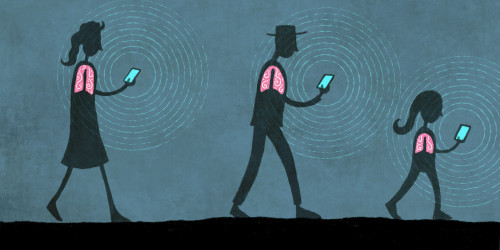
Two people walking with mobile devices, broadcasting a signal Deeplinks Blog byBennett Cyphers  | November 10, 2021

Data Broker Veraset Gave Bulk Device-Level GPS Data to DC Government


In the first weeks of the COVID-19 pandemic, a location data broker called Veraset offered officials in Washington, DC full access to its proprietary database of highly sensitive device-level GPS data, collected from cell phones, for the entire DC metro area.The officials accepted the offer, according to public...


Document  | September 30, 2021

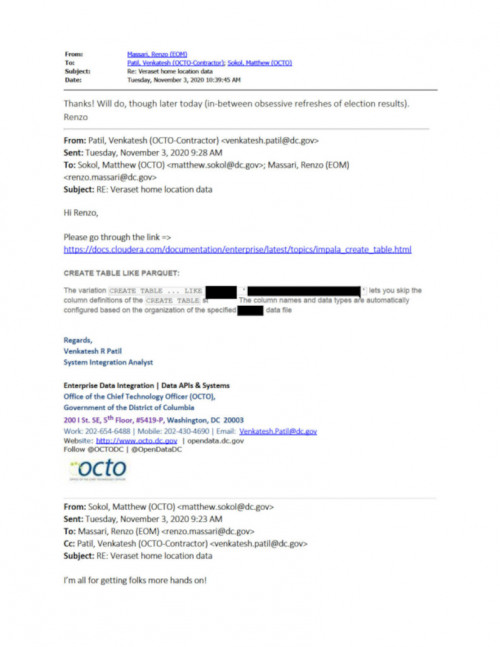
DC/Veraset Location Data Sharing Records


These documents, obtained by EFF in response to a request for records, describe the relationship between Washington, DC and Veraset, a location data broker.


covid passport image with eye in background Deeplinks Blog byAlexis Hancock, Adam Schwartz, Jon Callas  | August 31, 2021

Vaccine Passport Missteps We Should Not Repeat


Español

Vaccine mandates are becoming increasingly urgent from public health officials and various governments. As they roll out, we must protect users of vaccine passports and those who do not want to useor cannot usea digitally scannable means to prove vaccination. We cannot let the tools used to fight for public...


California Privacy Deeplinks Blog byAlexis Hancock, Adam Schwartz, Jon Callas  | June 25, 2021

Decoding California's New Digital Vaccine Records and Potential Dangers


This post was updated on 6/29/21 to more accurately describe how New York is running its voluntary vaccine passport programThe State of California recently released what it calls a Digital COVID-19 Vaccine Record. It is part of that states recent easing of...


An array of laptops, each with a virus image, except one, which has a surveillance eye. Deeplinks Blog byAlexis Hancock, Adam Schwartz, Hayley Tsukayama  | April 22, 2021

No Digital Vaccine Bouncers


The U.S. is distributing more vaccines and the population is gradually becoming vaccinated. Returning to regular means of activity and movement has become the main focus for many Americans who want to travel or see family. An increasingly common proposal to get there is digital proof-of-vaccination,...


Pages

1

2

3

4

5

6

7

8

9


next 

last »


Back to top


EFF Home

Follow EFF:


mastodon

facebook

instagram

x

Blue Sky

youtube

flicker

linkedin

tiktok

threads


Check out our 4-star rating on Charity Navigator.
 

Contact


General

Legal

Security

Membership

Press


About


Calendar

Volunteer

Victories

History

Internships

Jobs

Staff

Diversity & Inclusion


Issues


Free Speech

Privacy

Creativity & Innovation

Transparency

International

Security


Updates


Blog

Press Releases

Events

Legal Cases

Whitepapers

EFFector Newsletter


Press


Press Contact


Donate


Join or Renew Membership Online

One-Time Donation Online

Giving Societies

Corporate Giving and Sponsorship

Shop

Other Ways to Give


Copyright (CC BY)

Trademark

Privacy Policy

Thanks


JavaScript license information