Skip to content
Home
News
Sport
Business
Technology
Health
Culture
Arts
Travel
Earth
Audio
Video
Live
●Home
●News
●US & Canada
●UK
●UK Politics
●England
●N. Ireland
●N. Ireland Politics
●Scotland
●Scotland Politics
●Wales
●Wales Politics
●Africa
●Asia
●China
●India
●Australia
●Europe
●Latin America
●Middle East
●In Pictures
●BBC InDepth
●BBC Verify
●Sport
●Business
●World of Business
●Technology of Business
●NYSE Opening Bell
●Technology
●Artificial Intelligence
●AI v the Mind
●Health
●Culture
●Film &TV
●Music
●Art & Design
●Style
●Books
●Entertainment News
●Arts
●Arts in Motion
●Travel
●Destinations
●Africa
●Antarctica
●Asia
●Australia and Pacific
●Caribbean & Bermuda
●Central America
●Europe
●Middle East
●North America
●South America
●World’s Table
●Culture & Experiences
●Adventures
●The SpeciaList
●Earth
●Science
●Natural Wonders
●Climate Solutions
●Sustainable Business
●Green Living
●Audio
●Podcast Categories
●Radio
●Audio FAQs
●Video
●BBC Maestro
●Discover the World
●Live
●Live News
●Live Sport
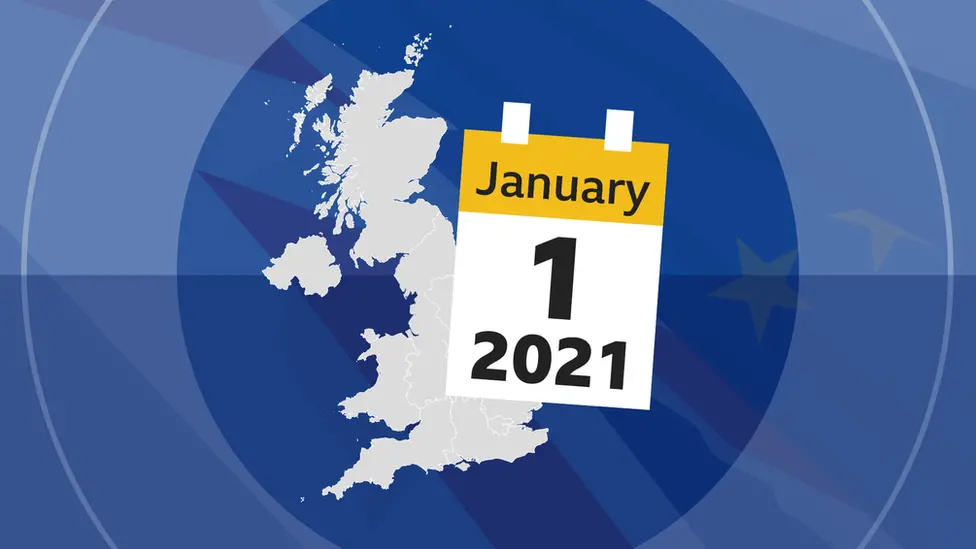
Brexit: Seven things changing on 1 January

 BBC
BBC
 From 1 January, the free movement of people and goods and services between the UK and the EU will end. This means significant differences to how people live, work and travel.
Here are some of the most important things that are changing.

1. European travel rules change
From January, UK nationals will only be able to travel without a visa to Schengen area countries for up to 90 days in any 180-day period (this includes most EU nations and Iceland, Norway, Switzerland and Liechtenstein). In addition, you will need to:
●Have at least six months left on your passport, except for trips to Ireland.
●Have travel insurance with health cover. Your current EHIC card will be valid until its expiry date and will be replaced by a new scheme in the future, but the government still advises you to get travel insurance with health cover.
●Make sure you've checked roaming charges with your mobile provider, as the guarantee of free roaming will end.
●Have obtained an animal health certificate from your vet at least 10 days before you travel - if you are travelling with your pet - including from Great Britain to Northern Ireland. The current EU pet passport scheme will no longer apply.
●Use separate lanes from EU, EEA and Swiss citizens at border control.
Significantly, because of the Covid pandemic, travellers from non-EU countries - including the UK - will not be able to visit the EU at the moment, except for a certain number of essential reasons.
2. Duty-free shopping will return
When the UK was an EU member, you were allowed to bring unlimited amounts of alcohol and tobacco back from an EU country without paying any duty at the border, as long as duty had been paid in the country where you bought it and you could prove it was for your own use.
From 2021, duty-free shopping will be available if you travel to the EU, although there will now be limits to the amount you can bring in duty-free from the EU, as there are for arrivals from non-EU countries.
The permitted amount of duty-free tobacco and alcohol will increase however. So you will be able, for example, to bring 18 litres of still wine and 42 litres of beer.
3. The rules change for UK citizens who want to move to the EU
If you're already living in an EU country, you will have certain protections under the withdrawal agreement.
But even then, you should check that country's specific rules. You may need to register or apply for residency, get new documents, or meet specific requirements - like having a job.
For example, UK nationals living in France will need to obtain new residents' permits.
 Getty Images
If you plan to move to the EU in 2021, you will no longer have an automatic right to live, work, study or retire there. You will need a visa if you are going there for any reason other than tourism.
The rules will depend on the country you want to move to, and the reason for your move. You should check the rules for the country that you are intending to move to.
People planning to move to Ireland will be largely unaffected.
4. There are new rules for EU citizens in the UK
If you're an EU citizen living in the UK by 31 December 2020 - or from Iceland, Liechtenstein, Norway or Switzerland - your rights remain the same until 30 June 2021.
But you should check if you can stay after that.
If you have "indefinite leave to remain" or "indefinite leave to enter" the UK there's no need for you to do anything. If you don't, you'll need to apply for the EU Settlement Scheme or become a UK citizen if you qualify.
Again, because of the Common Travel Area, rights of Irish citizens will not change.
5. There'll be a new UK immigration system
From January, there'll be a new points-based system for foreign citizens (except Irish nationals) wanting to move to the UK.
The government says it'll treat EU and non-EU citizens equally and will aim to attract people who can contribute to the UK economy.
People wanting to move to the UK to work, live or study will have to apply and pay for a visa. It will cost £348 to apply for a student visa from outside the UK, or £475 to extend or switch one from inside the UK.
Applying for a visa as a skilled worker will cost between £610 and £1,408 per person - unless an individual has skills the country is short of. People applying for visas will also have to pay a health surcharge of £624 per person per year, unless they are healthcare workers.
●How will the UK points-based immigration system work?
6. If you want to buy or sell with the EU, things get trickier
 Getty Images
The UK and the EU have agreed there'll be no taxes on each other's goods when they cross borders and no limits on the amount of things that can be traded.
However, traders in England, Wales and Scotland (for the case of Northern Ireland, see below) will need to make customs declarations as if they were dealing with countries elsewhere in the world - this means a lot of paperwork.
Some products, including plants, live animals and some foods, will also need special licences and certificates. Others will have to be labelled in specific ways.
There will no longer be automatic recognition of professional qualifications - people will need to check each country's rules to make sure their qualifications are still recognised.
And while the UK government has chosen to delay - by six months - the imposition of full controls, the EU will be carrying out checks from 1 January.
Even though trade with the EU will become trickier, the UK is free to negotiate its own trade deals with other countries, like the US. Brexit supporters say this will benefit the economy in the long run, although critics say it's more important to remain close to the EU.
●A quick guide to what's in the Brexit deal
7. Northern Ireland becomes an exception
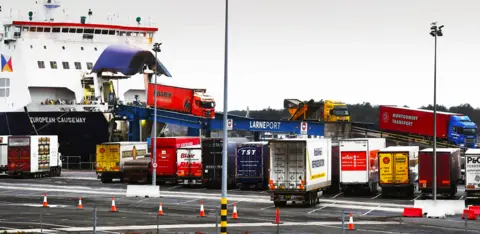
The UK and EU have agreed to keep an all-but-invisible border, without checkpoints, between Northern Ireland and the Republic of Ireland (which remains in the EU).
Northern Ireland will continue to follow many of the EU's rules, meaning that lorries can continue to drive across the border without having to be inspected.
However, some new checks will be needed on certain goods arriving into Northern Ireland from the rest of the UK (England, Scotland and Wales) instead.
Food products - such as meat, fish and eggs - will need to be checked to ensure they comply with EU standards.
However, in order to reduce any potential disruption, supermarkets will be given an initial three-month "grace period" where the rules will not be enforced on the food they bring into Northern Ireland. Certain meat products will have a longer, six-month grace period. What happens after this period is unclear and will be the subject of future negotiations.
An agreement has also been reached to eliminate tariffs - extra charges on goods - for most trade between Great Britain (England, Scotland and Wales) and Northern Ireland. Some new paperwork will nevertheless be required from 1 January and businesses will need be ready for the changes.
●What will happen in Northern Ireland after Brexit?
CORRECTION: A previous version of this article suggested there were different rules for exporting goods to different EU countries.
What is the Brexit transition period?
What are the sticking points in Brexit trade talks?
What trade deals has the UK done so far?
What is the new Northern Ireland Brexit trade deal?
EU citizens
UK immigration
EU Settlement Scheme
EU-UK post-Brexit trade deal
Travel
British citizenship
Brexit
Passports
Related
Same-sex marriage must be respected throughout EU, top court tells Poland
Starmer: UK does not need to choose between US and EU
Family 'stressed' over UK removal threat
More from the BBC
22 hrs ago
Globetrotting YouTubers to take on new world tour
Chris and Marianne Fisher drove through 29 countries in their last van, which they now aim to beat.
22 hrs ago
2 days ago

Plan ahead and dress wisely: How to minimise add-on costs when you fly
Don't get swept into paying for extras you don't need.
2 days ago
2 days ago
Documentary on Glasgow immigration protest wins Sundance award
The film documents how hundreds of residents in Pollokshields prevented the detention of two neighbours during a dawn raid in May 2021.
2 days ago
5 days ago

Work to upgrade airport departure lounge under way
The Ports of Jersey says this phase of work at Jersey Airport will be completed by the summer.
5 days ago
5 days ago
Rwanda seeks £100m from UK over axed asylum deal
The African nation argues it is owed payments but the Home Office says it will fight the case.
5 days ago
Home
News
Sport
Business
Technology
Health
Culture
Arts
Travel
Earth
Audio
Video
Live
Weather
BBC Shop
BritBox
The BBC is in multiple languages
Read the BBC In your own language
Oduu Afaan Oromootiin
Amharic ዜና በአማርኛ
Arabic عربي
Azeri AZƏRBAYCAN
Bangla বাংলা
Burmese မြန်မာ
Chinese 中文网
Dari دری
French AFRIQUE
Hausa HAUSA
Hindi हिन्दी
Gaelic NAIDHEACHDAN
Gujarati ગુજરાતીમાં સમાચાર
Igbo AKỤKỌ N’IGBO
Indonesian INDONESIA
Japanese 日本語
Kinyarwanda GAHUZA
Kirundi KIRUNDI
Korean 한국어
Kyrgyz Кыргыз
Marathi मराठी
Nepali नेपाली
Noticias para hispanoparlantes
Pashto پښتو
Persian فارسی
Pidgin
Polish PO POLSKU
Portuguese BRASIL
Punjabi ਪੰਜਾਬੀ ਖ਼ਬਰਾਂ
Russian НА РУССКОМ
Serbian NA SRPSKOM
Sinhala සිංහල
Somali SOMALI
Swahili HABARI KWA KISWAHILI
Tamil தமிழில் செய்திகள்
Telugu తెలుగు వార్తలు
Thai ข่าวภาษาไทย
Tigrinya ዜና ብትግርኛ
Turkish TÜRKÇE
Ukrainian УКРАЇНСЬКA
Urdu اردو
Uzbek O'ZBEK
Vietnamese TIẾNG VIỆT
Welsh NEWYDDION
Yoruba ÌRÒYÌN NÍ YORÙBÁ
Follow BBC on:
Terms of Use
Subscription Terms
About the BBC
Privacy Policy
Cookies
Accessibility Help
Contact the BBC
Advertise with us
Do not share or sell my info
BBC.com Help & FAQs
Content Index
Set Preferred Source
Copyright 2026 BBC. All rights reserved. The BBC is not responsible for the content of external sites. Read about our approach to external linking.